
 By wkxoq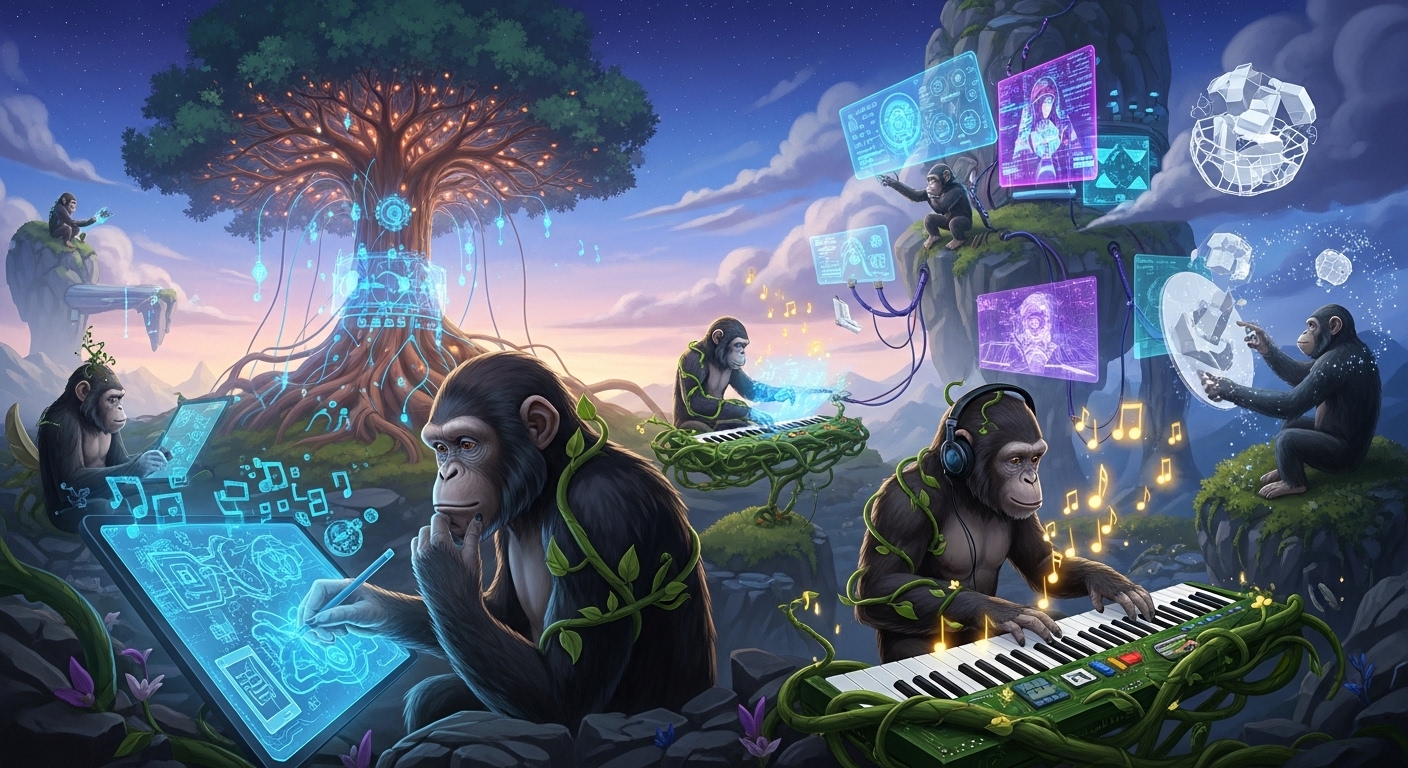
In today’s fast-changing digital landscape, creativity and technology are merging in fascinating ways. One concept that has started to capture attention is dreaming apes, a term that symbolizes the blend of imagination, artificial intelligence, and evolutionary thinking. The idea of dreaming apes reflects how modern systems are beginning to “dream” creatively, much like humans, by generating ideas, visuals, and solutions beyond traditional programming.
At its core, dreaming apes represents a shift from rigid computing to fluid, imaginative intelligence. It highlights how machines are no longer just tools but active participants in creative processes. This concept is gaining traction among developers, artists, and innovators who see technology as a partner in imagination rather than just a utility.
What Are Dreaming Apes?
The term dreaming apes is often used metaphorically to describe intelligent systems that can simulate creativity and imagination. Just as early humans evolved from apes and developed the ability to dream, think, and innovate, modern AI systems are evolving to mimic these cognitive abilities.
Dreaming aps can be understood as:
- AI systems capable of generating creative outputs
- Algorithms that simulate human imagination
- Digital entities that “dream” through data patterns
- Tools that merge logic with artistic expression
This concept is not limited to a single technology but spans across multiple domains including machine learning, generative AI, and neural networks.
The Origins of the Dreaming Apes Concept
The idea of dreaming apes draws inspiration from both evolutionary biology and cognitive science. Humans evolved over millions of years, gradually developing the ability to think abstractly and dream. Similarly, artificial intelligence has progressed from simple rule-based systems to complex neural networks capable of learning and adapting.
In recent years, advancements in deep learning have enabled machines to generate images, music, and even stories. These developments have led to the emergence of dreamng apes as a symbolic representation of this evolution.
It reflects the journey from basic computation to creative intelligence, where machines are no longer limited to processing data but can also interpret and transform it into meaningful outputs.
How Dreaming Apes Technology Works
Neural Networks Behind Dreaming Apes
The foundation of dreaming apes lies in neural networks, which are designed to mimic the structure of the human brain. These networks process large amounts of data and identify patterns, enabling them to generate new and unique outputs.
For example, generative models can:
- Create realistic images from text descriptions
- Compose music based on style patterns
- Write content that resembles human language
This ability to generate new content is what gives dreaming aps their “dream-like” quality.
Generative AI and Dreaming Apes
Generative AI plays a key role in the development of dreaming apes. These systems are trained on vast datasets and learn to produce outputs that are both original and contextually relevant.
Unlike traditional software, which follows predefined instructions, dreaming aps systems can explore possibilities and create variations, much like a human mind during dreaming.
Key Features of Dreaming Apes
Creative Intelligence in Dreaming Apes
One of the defining characteristics of dreaming apes is creative intelligence. These systems can go beyond simple problem-solving and generate artistic or innovative results.
Adaptive Learning
Dreaming apes systems continuously learn from new data, improving their outputs over time. This adaptability allows them to stay relevant in dynamic environments.
Multidisciplinary Applications
The concept of dreaming aps is not limited to one field. It is used in:
- Art and design
- Content creation
- Gaming and virtual worlds
- Scientific research
Human-AI Collaboration
Dreaming apes emphasize collaboration between humans and machines. Instead of replacing human creativity, these systems enhance and expand it.
Applications of Dreaming Apes in Modern Technology
Dreaming Apes in Digital Art
Artists are using dreaming apes technologies to create unique visual pieces. AI-generated art combines human input with machine creativity, resulting in innovative designs.
Dreaming Apes in Content Creation
Writers and marketers are leveraging dreming apes systems to generate ideas, drafts, and even complete articles. This helps speed up the creative process while maintaining originality.
Dreaming Apes in Gaming
In the gaming industry, dreming apes are used to design dynamic environments, characters, and storylines that evolve based on player interactions.
Dreaming Apes in Scientific Research
Researchers use draming apes models to simulate complex systems, discover patterns, and generate hypotheses, making them valuable tools in innovation.
Benefits of Dreaming Apes
Enhanced Creativity
One of the biggest advantages of dreaming apes is their ability to enhance human creativity. They provide new perspectives and ideas that might not emerge through traditional thinking.
Efficiency and Speed
Dreamng apes systems can generate results quickly, saving time in creative and analytical processes.
Innovation Across Industries
From entertainment to healthcare, dreming apes are driving innovation by introducing new ways of thinking and problem-solving.
Accessibility of Creativity
These technologies make creative tools accessible to a wider audience, allowing more people to explore artistic and innovative pursuits.
Challenges and Ethical Considerations of Dreaming Apes
While dreaming apes offer many benefits, they also raise important challenges.
Data Privacy
Since these systems rely on large datasets, ensuring user privacy and data security is crucial.
Authenticity and Ownership
Questions about ownership of AI-generated content are becoming increasingly important as dreming apes systems produce original works.
Ethical Use of AI
It is essential to use dreaming aps responsibly, avoiding misuse or harmful applications.
Dependence on Technology
Over-reliance on AI systems may reduce human creativity if not balanced properly.
The Future of Dreaming Apes
The future of dreaming apes looks promising as technology continues to advance. Innovations in artificial intelligence, machine learning, and computational creativity will further enhance their capabilities.
Future developments may include:
- More realistic AI-generated content
- Deeper integration with virtual and augmented reality
- Improved human-AI collaboration tools
- Greater personalization in creative outputs
As these technologies evolve, dreaming aps will likely play a central role in shaping the future of digital creativity and innovation.
Conclusion
Dreaming apes represents a powerful and imaginative concept that bridges the gap between human creativity and artificial intelligence. By combining advanced algorithms with creative thinking, these systems are transforming how we approach art, design, and problem-solving.
Rather than replacing human ingenuity, dreamng apes enhance it, offering new possibilities and perspectives. As we move forward, this concept will continue to influence various industries, redefining the relationship between humans and technology.
In a world driven by innovation, dreaming apes stands as a symbol of the next stage in digital evolution—where machines not only think but also imagine.